
For the past few years, much of the conversation around artificial intelligence has focused on prompt engineering; learning how to ask AI better questions to get better results.
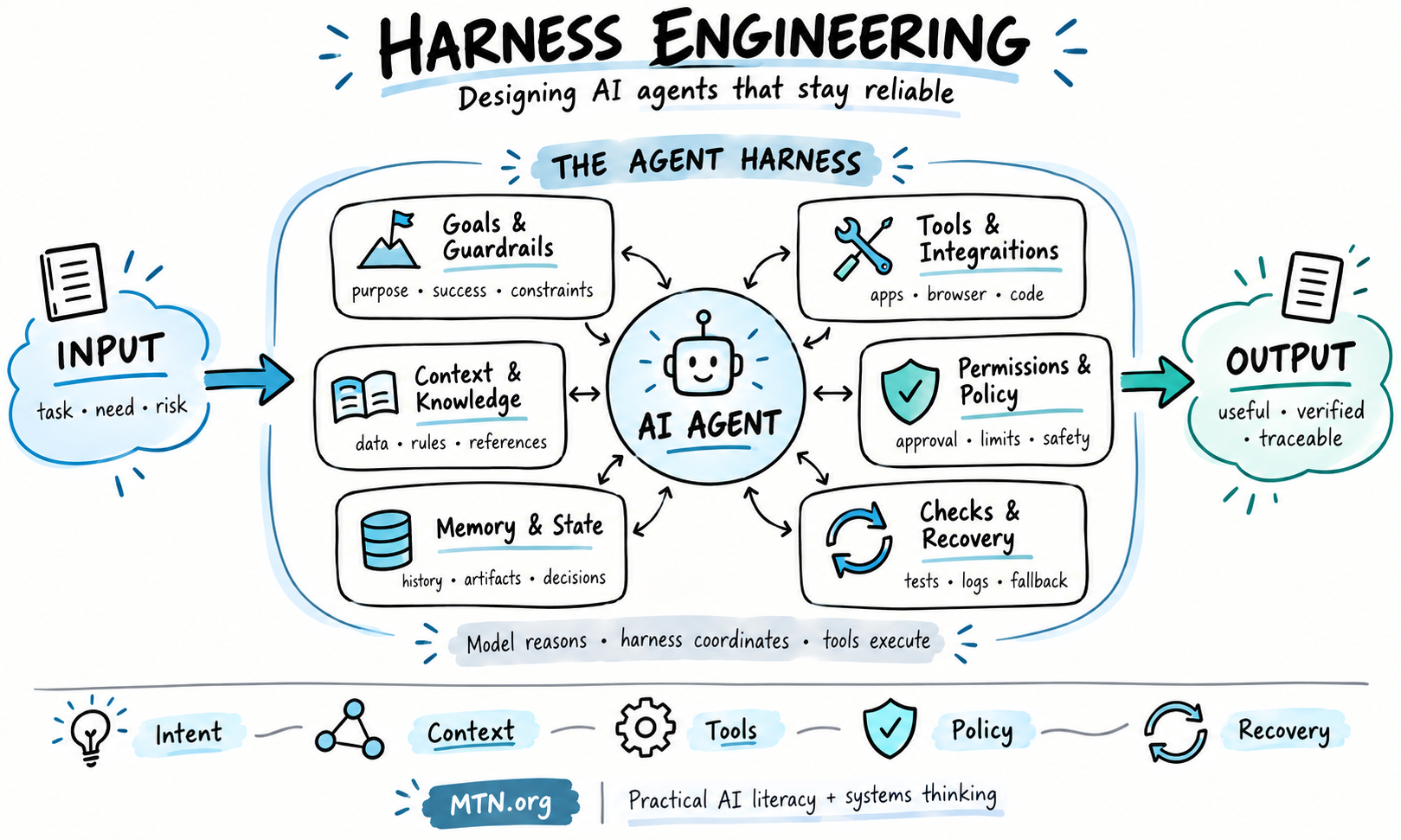
But as AI evolves from answering questions to actually completing tasks, a new discipline is emerging: harness engineering.
A recent article shared by @0xwhrrari on X explores an important shift in how we build reliable AI agents. The central idea? When AI fails, the problem isn’t always the model or the prompt. Often, it’s the system surrounding it.
From Smart Models to Reliable Systems
An AI model can reason, generate content, and recommend actions. But making it useful in real-world operations requires more than intelligence.
It needs access to the right information, appropriate tools, persistent memory, clear permissions, and ways to verify that its work is correct.
That’s where harness engineering comes in.
Think of it this way:
- Prompt engineering determines what we ask AI to do.
- Context engineering determines what information AI has available.
- Harness engineering determines how AI operates, completes tasks, checks its work, and learns from failures.
The distinction matters as organizations begin integrating AI agents into everyday workflows.
Why This Matters for Businesses
Imagine an AI agent responsible for preparing a weekly business report. Simply telling it to “create an accurate report” isn’t enough.
A reliable system would ensure the agent uses current data, follows established reporting rules, validates its calculations, flags missing information, and requests human approval when necessary.
Instead of repeatedly fixing the same mistakes, organizations can improve the underlying processes so those mistakes are less likely to happen again.
This represents a fundamental shift: We’re moving from using AI as a tool to designing systems where AI can work reliably alongside people.
The Opportunity Ahead
At MTN, we believe the real opportunity in AI isn’t simply adopting the latest model. It’s developing the skills to rethink workflows, build effective systems, and use emerging technologies responsibly.
Organizations don’t need to automate everything overnight. They can start by identifying one repetitive process, documenting how it should work, defining what success looks like, and building in appropriate safeguards.
The future of AI will be shaped not just by smarter models, but by people who understand how to put that intelligence to work.
The next competitive advantage may not be knowing how to write the perfect prompt, but knowing how to build the right system around it.
Read the original article on X for a deeper exploration of harness engineering and reliable AI agents.